Choosing a new hairstyle can feel exciting and nerve-wracking at the same time. A cut that looks stunning on a magazine cover may feel completely different on you, and the reason is often face shape. If you are planning a restyle haircut London appointment, understanding how your features, hair texture and lifestyle work together makes the decision far easier and the result far more flattering. At Dc_Izelle Hair&Beauty, we help clients find styles that suit them every week, and this guide shares the same approach so you can walk into the salon knowing exactly what to ask for.
How Do You Choose a Hairstyle for Your Face Shape?
Identify your face shape, then choose a cut that balances it. Rounder faces often suit length and structure, longer faces suit width and softness, and angular faces often suit softer, textured shapes. Treat these as guidelines, not rules. Your hair texture, density and daily routine matter just as much, which is why a restyle haircut London consultation always starts with a conversation, not a pair of scissors.
Step 1: Work Out Your Face Shape
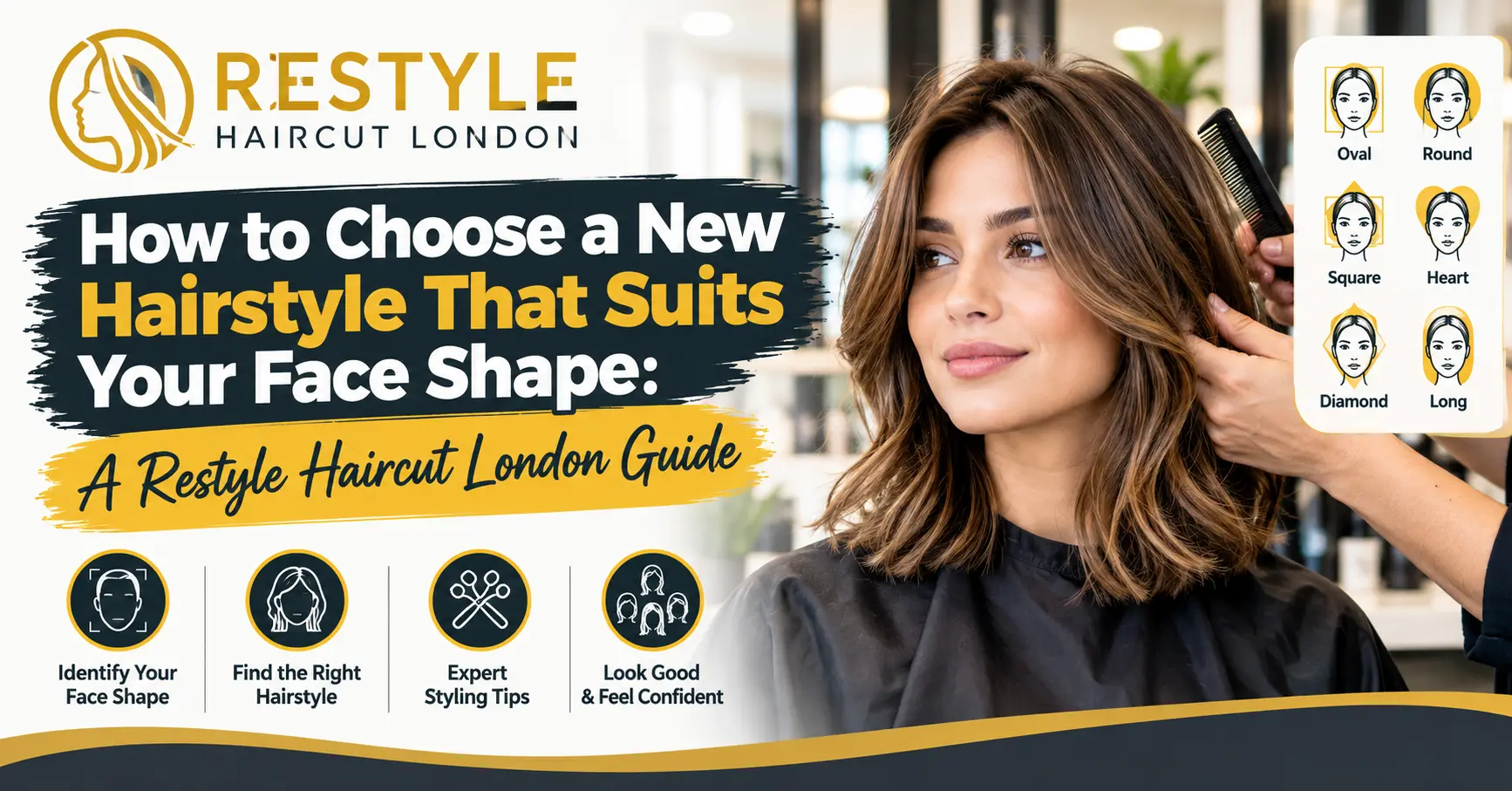
Pull your hair back, stand in front of a mirror in natural light and look at three things: the width of your forehead, cheekbones and jawline, and the overall length of your face. Most people fall into one of these common shapes, although many have a mix.
Oval
Your face is slightly longer than it is wide, with a softly rounded jaw. This shape is considered very versatile, so most styles can work.
Round
Your face is about as wide as it is long, with soft cheeks and a rounded jawline. The aim is usually to add length and definition.
Square
Your forehead, cheekbones and jaw are similar in width, with a strong, angular jawline. Softer lines and texture help balance the angles.
Heart
Your forehead and cheekbones are wider than your jaw, and your chin is narrower. Styles that add softness around the jaw usually balance this shape well.
Oblong or Long
Your face is noticeably longer than it is wide. Width and volume at the sides tend to create balance.
Diamond
Your cheekbones are the widest part of your face, with a narrower forehead and chin. Styles that add width at the forehead and jawline can soften the cheekbones.
Hair Restyle Ideas for Every Face Shape
Face shape hairstyles are about balance, not perfection. Use the ideas below as a starting point for your consultation.
Hair Restyle Ideas for Oval Faces
- A classic long bob or lob
- Soft, face-framing layers
- A sleek, long style with movement
- A short pixie if you want something bold
Hair Restyle Ideas for Round Faces
- Long layers that fall below the chin to lengthen the face
- A side-swept fringe
- A longer bob with angled lines
- Volume at the crown to add height
Hair Restyle Ideas for Square Faces
- Soft, wavy layers that gently disguise the jaw
- A side part with a curtain fringe
- A textured, shoulder-length cut
- Rounded layers that soften angular lines
Hair Restyle Ideas for Heart-Shaped Faces
- A chin-length bob to add fullness near the jaw
- Side-swept or curtain fringes
- Layers that start at the chin and add width below
- Soft waves around the lower half of the face
Hair Restyle Ideas for Long Faces
- A bob with volume at the sides
- Soft, side-swept fringes to shorten the appearance of length
- Layers and waves that add width
- Avoid very long, flat, straight styles that can lengthen the face further
Hair Restyle Ideas for Diamond Faces
- Chin-length styles with fullness near the jaw
- A fringe or side-swept style to add width at the forehead
- Layered cuts that soften the cheekbones
- Soft curls or waves for balance
Go Beyond Face Shape: Other Factors That Matter
Face shape is only one part of choosing the right style. A good stylist also considers:
- Hair texture: Straight, wavy, curly and coily hair behave differently, and the same cut can look very different on each.
- Hair density: Thick hair may need layering to remove weight, while fine hair often looks fuller with a blunt, simple shape.
- Hairline and growth patterns: Cowlicks and strong growth directions affect fringes and partings.
- Lifestyle: If you have little time in the morning, a low-maintenance cut is a better choice than a style that needs daily blow-drying.
- Hair condition: Healthy ends give a cleaner finish. If your hair is dry or damaged, a nourishing hair treatment before a big change can help it look its best.
Popular New Haircut Styles to Consider
If you are searching for new haircut styles, these options appear most often in consultations:
- The classic bob: Timeless, polished and adaptable to most face shapes.
- The lob (long bob): A softer, longer take on the bob that suits many looks.
- Layered cuts: Add movement and shape, and work on many textures.
- Curtain fringe: A face-framing option that flatters many face shapes.
- The pixie cut: A confident, low-maintenance choice for those who want a bigger change.
- Long, soft waves: A relaxed, versatile style that works well for many people.
A women’s restyle haircut can be as subtle as a trim with shaping or as dramatic as a full transformation, so be clear with your stylist about how much change you want.
What Professional Hair Restyling Involves
Professional hair restyling is more than a cut. It begins with a consultation, where your stylist looks at your face shape, hair texture and lifestyle, then explains what will realistically work. After that, they plan the shape, section the hair and cut with precision, checking the balance from every angle. Finally, they style the finished look and show you how to recreate it at home.
At Dc_Izelle Hair&Beauty, we explain each step so there are no surprises. If you are unsure about a big change, a good stylist will often suggest a gradual approach, such as adding layers first and cutting shorter later.
How to Prepare for Your Restyle Haircut London Appointment
A little preparation makes a big difference to the result.
Collect Reference Photos
Save several pictures of styles you like, plus one or two you dislike. This helps your stylist understand your taste. Try to choose photos of people with a similar hair texture to yours, as this gives a more realistic idea of the result.
Be Honest About Your Routine
Tell your stylist how much time you spend styling, which products you use and whether you tie your hair back at work or the gym. This helps them design a cut that works in real life.
Think About Colour
A new cut and colour can complement each other. If you are considering a change, discuss colour and highlights at the same appointment, because colour can add dimension and frame your face.
Ask Questions
Ask how often the cut will need maintaining, how to style it and what products are best. A confident stylist will welcome your questions.
Common Mistakes When Choosing a New Hairstyle
- Copying a photo exactly: Different hair texture and face shape can change the result.
- Ignoring maintenance: A beautiful cut that needs daily styling may not suit a busy lifestyle.
- Going too drastic too fast: If you are unsure, change gradually.
- Forgetting hair condition: Damaged ends can spoil the shape of a new cut.
- Not communicating: Be clear about length, shape and what you want to avoid.
How to Care for Your New Style
Once you have your new look, a few habits help it last.
- Use a gentle shampoo and conditioner suited to your hair.
- Use heat protection before blow-drying or styling.
- Book regular trims to keep the shape sharp.
- Ask your stylist how to style the cut at home.
- Brush gently, starting at the ends.
When planning a restyle haircut London visit, remember that a good cut should grow out well, so ask how it will look in six to eight weeks.
Frequently Asked Questions
How do I know my face shape?
Pull your hair back and look at the width of your forehead, cheekbones and jawline, and the overall length of your face. A stylist can also tell you in a consultation.
Can I have a hairstyle that does not match my face shape?
Yes. Face shape hairstyles are guidelines, not strict rules. Hair texture, personality and lifestyle all matter, and a skilled stylist can adapt almost any style to suit you.
How often should I restyle my hair?
There is no fixed rule. Many people change their style every year or two, while others prefer to keep a cut they love and trim it regularly. A trim every six to eight weeks helps keep most styles neat.
Will a new haircut suit curly or coily hair?
Yes, but the cut should be planned around your curl pattern. Tell your stylist about your texture so the shape sits well when the hair dries.
What should I bring to a restyle haircut London appointment?
Bring a few reference photos, an idea of how much time you want to spend styling and any concerns about your hair. Honest information helps your stylist create the best result.
How much can a stylist change in one visit?
That depends on your hair length, condition and goals. A stylist will advise whether a big change is realistic in one appointment or better done in stages.
Conclusion
Choosing a new hairstyle becomes much easier when you understand your face shape, hair texture and lifestyle. Start with the shape of your face, explore hair restyle ideas that balance it, prepare reference photos and be open with your stylist about your routine. A thoughtful restyle haircut London appointment should leave you with a cut that feels like you, looks great and is easy to maintain. Dc_Izelle Hair&Beauty is here to guide you through every step, so when you are ready for a change, you can book your appointment online and leave with a style you love.